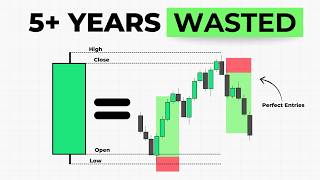



What Is a Sniper Entry in Forex Trading?
A forex sniper entry strategy is an institutional trading methodology focused on entering currency markets at the precise point of market reversal or acceleration. Unlike traditional retail trading models that enter after a long-confirmed trend—often resulting in wide stop losses and late entries—a sniper entry aims for pinpoint execution. This approach minimizes drawdown to just a few pips while maximizing the risk-to-reward (RR) ratio, frequently yielding returns ranging from 1:5 to 1:10 or higher.
The term "sniper" reflects patience, timing, and lethal accuracy. Sniper traders do not overtrade or hold position bias throughout the entire day. Instead, they wait for specific liquidity events during high-volume trading sessions (such as the London or New York openings) and enter using lower timeframe execution triggers. Utilizing precision technical tools like custom forex indicators can help highlight session ranges and key price points, giving traders the context necessary to capitalize on institutional order flow.
Core Takeaway: Sniper trading is not about predicting market movement randomly; it is about recognizing where institutional liquidity rests, waiting for large market participants to manipulate price into those levels, and executing with minimal stop loss distance upon structural confirmation.
Retail Support and Resistance vs Institutional Liquidity
The fundamental divide between losing retail traders and successful sniper traders lies in how they view horizontal price levels. Traditional technical analysis teaches traders to buy at double bottoms or horizontal support levels, placing stop losses just a few pips below the line. Conversely, institutional market makers view these exact levels as pools of engineering liquidity.
Because commercial banks, hedge funds, and central banks trade with massive capital volumes, they cannot enter market orders without causing significant slippage. To fill multi-million dollar buy orders, institutions need an equal amount of sell orders. These sell orders exist precisely where retail traders place their stop-loss sell stops: directly beneath obvious support levels, equal lows (EQL), or key trendlines.
- Retail Mindset: Treats historic swing highs and swing lows as static walls where price will bounce predictably.
- Institutional Mindset: Views old highs and lows as target zones packed with stop-loss liquidity needed to fill opposing institutional orders.
- The Liquidity Raid: Smart money drives price beyond retail support/resistance to trigger stop orders, liquidity, and breakout traps before engineering the actual directional move.
The 3 Core Rules for High Risk-to-Reward Sniper Setups
Achieving consistent 1:5+ risk-to-reward ratios requires strict filtering. You cannot execute a sniper entry at any arbitrary point on a chart. Every high-probability setup must adhere to three non-negotiable rules:
- Rule 1: Time & Price Alignment (Killzones): Sniper trades are executed strictly during high-volume market windows known as Killzones (London Open: 2:00–5:00 AM EST, New York Open: 7:00–10:00 AM EST). Trading outside these windows drastically increases the likelihood of chop and false breakouts.
- Rule 2: Liquidity Sweep Confirmation: Before entering long or short, price must sweep an established liquidity pool (Asian session extremes, previous day highs/lows, or clear equal highs/lows).
- Rule 3: Structural Displacement: Following the liquidity purge, price must aggressively move in the intended direction, breaking micro market structure with energetic expansion candles.
How to Identify Asian Session Liquidity Sweeps
The Asian session (typically 7:00 PM to 2:00 AM EST) is generally characterized by lower trading volume and tight price consolidation ranges. This range forms the foundation for the entire trading day's sniper opportunities.
During the Asian session, market participants place buy stops above the Asian High (Asia High) and sell stops below the Asian Low (Asia Low). When the London session opens, market makers manipulate price outside the Asian range—a move frequently referred to as the "Judas Swing."
Asian Sweep Mechanics: If the overall higher timeframe daily bias is bullish, expect the London open to push down aggressively, breaking the Asian Low to clear sell stops. Once liquidity is consumed, institutional buyers push price back inside the range, initiating the true expansion phase for the day.
Understanding Market Structure Shifts (MSS) and Fair Value Gaps
Once a liquidity pool is swept, sniper traders do not jump blindly into the market. They wait for institutional footprints: Market Structure Shifts (MSS) and Fair Value Gaps (FVG).
A Market Structure Shift (MSS) occurs when price rapidly reverses after sweeping liquidity, breaking the recent swing high (in a bullish shift) or swing low (in a bearish shift) with candle body closures on lower timeframes (1M, 3M, or 5M). This structural break confirms that smart money has committed capital in the new direction.
A Fair Value Gap (FVG) is a three-candle imbalance pattern created during the energetic displacement move:
- Candle 1: The initial candle preceding the sudden movement.
- Candle 2: A large, full-bodied displacement candle demonstrating heavy volume.
- Candle 3: The subsequent candle. An FVG exists when there is a gap between the high of Candle 1 and the low of Candle 3 (in a bullish example).
This gap represents an inefficiency where only one side of the market was delivered. Algorithms routinely retrace to fill this imbalance before continuing in the direction of the institutional displacement.
Step-by-Step Multi-Timeframe Execution: Daily Bias to 1-Minute Entry
To achieve sniper precision without getting caught in market noise, traders follow a strictly top-down approach:
- Step 1: Daily/4-Hour Frame (Directional Bias): Determine higher timeframe order flow. Are higher timeframe highs or lows being targeted? Identify major discount or premium zones.
- Step 2: 15-Minute Frame (Liquidity Mapping): Mark session highs and lows (Asian Range, London Open Range, Previous Day High/Low). Wait patiently until a killzone sweeps one of these key levels.
- Step 3: 1-Minute to 5-Minute Frame (Execution): Following the liquidity sweep, zoom into the 1M or 3M chart. Wait for a Market Structure Shift and a resulting Fair Value Gap.
- Step 4: Order Placement & SL Setting: Place a limit order at the start or 50% equilibrium (Consequent Encroachment) of the lower timeframe FVG. Position your Stop Loss 1 to 2 pips beyond the displacement low/high. Target opposing session liquidity pools.
Traders who prefer automating execution parameters across multiple accounts or platforms can leverage dedicated copytrading platforms or deploy algorithmic rule sets using automated forex EAs to capture precision entries around key session openings.
Live Trade Breakdown: Gold (XAUUSD) and EURUSD Sniper Examples
Example 1: EURUSD London Open Long Setup
During the Asian session, EURUSD consolidated in a tight 18-pip range between 1.0820 and 1.0838. At 03:15 AM EST (London Killzone), price dropped sharply to 1.0814, sweeping the Asian Low and taking out retail sell stops. On the 1-minute chart, price immediately reacted with a 15-pip bullish impulse candle, breaking the previous 1M swing high at 1.0825 (MSS).
The impulse left a 1M Fair Value Gap between 1.0819 and 1.0822. A buy limit order was placed at 1.0822 with a 5-pip stop loss at 1.0812 (below the sweep low). The trade filled smoothly at 03:22 AM EST and reached the target (Asian High at 1.0838 and previous day high at 1.0862), securing a 1:8 Risk-to-Reward outcome.
Example 2: Gold (XAUUSD) New York Killzone Short Setup
At 08:30 AM EST, Gold traded upward, pushing past the London Session High to reach $2,350.50. Immediately following the liquidity sweep of the London High, a 5-minute displacement candle slammed Gold down to $2,341.00, completing a clear Market Structure Shift.
A 3-minute Fair Value Gap formed between $2,346.00 and $2,348.00. A sell limit was set at $2,346.50 with a $2.50 stop loss ($2,349.00). Price retraced into the gap, filled the order, and rapidly declined to target the Asian Session Low at $2,321.50—delivering a 1:10 RR ratio trade in under 45 minutes.
Essential Risk Management Rules for Sniper Traders
Because sniper trades rely on lower timeframe structures and tight stop losses (often 3–8 pips), proper risk management is critical to survival and long-term profitability. Slippage, spread expansion during high-impact news, and false shifts can lead to quick stopouts.
- Fixed Percentage Risk: Limit risk per trade to 0.5% or 1% of total account capital. Due to high RR ratios, winning even 35–40% of trades yields massive equity curves.
- Account for Spreads: Do not use 2-pip stop losses on pairs with wide spreads or high slippage brokers. Stick to zero-spread/RAW accounts and primary pairs like EURUSD, GBPUSD, or XAUUSD.
- Avoid High-Impact News Sweeps: Never place tight limit orders directly ahead of NFP, CPI, or FOMC releases. Algorithmic slippage during major news events can breach stop losses significantly.
- Custom Strategy Development: If you seek to convert your manual sniper entry rules into semi-automated execution scripts or custom risk assistants, explore tailored solutions through custom MQL programming services.
Frequently Asked Questions About Forex Sniper Strategy
Here are key insights to common questions regarding sniper entry strategies, timeframes, and implementation.