

What Makes the Best Indicator in Forex Trading?
Navigating the world of currency markets requires an analytical edge, leading many traders on a constant quest to find the best indicator in forex trading. However, experienced market participants understand that no single mathematical formula holds a holy-grail status. Instead, the best indicators in forex trading are those that provide objective clarity on price momentum, volatility, and trend direction while minimizing mathematical lag. Whether you are exploring our curated indicator repository or programming custom logic via our MQL development services, understanding the core anatomy of technical metrics is critical for consistent profitability.
When searching for a good indicator forex traders must differentiate between leading and lagging tools. Leading oscillators attempt to predict future turning points, while lagging trend followers confirm existing momentum. Finding the best indicator forex trading solution means matching the mathematical output of the tool directly to your specific trading timeframe and risk tolerance parameters.
Signal Fidelity & Low Lag
The best technical indicators for forex trading process price data rapidly, reducing the delay between raw market movement and visual signal generation.
Elimination of Market Noise
Top-tier forex trading indicators filter out erratic, low-liquidity price spikes to highlight high-probability institutional order blocks.
💡 Pro Execution Tip: When evaluating any best indicator for trading forex, always backtest it across multiple market regimes—ranging from high-volatility London breakout sessions to low-liquidity Asian ranges—to verify its statistical expectancy before risking live capital.
Top 5 Forex Indicators Compared and Tested
To isolate the best indicator for forex trading, we must analyze the core categories utilized by institutional desks and algorithmic developers alike. Each category serves a distinct purpose, ranging from directional confirmation to volatility measurement. Many algorithmic developers pair these exact methodologies with automated execution scripts found in our expert advisor directory.
Below is a comprehensive structural breakdown comparing how standard implementations differ from advanced institutional configurations when utilizing best technical indicators forex setups:
| Indicator Category | Standard Retail Setup | Institutional / Pro Setup |
|---|---|---|
| Moving Averages (Trend) | SMA 50 / 200 Crossover | EMA Multi-Timeframe Stack (8, 21, 55) |
| Momentum Oscillators | RSI Default (14 Period, 70/30) | Custom RSI with Dynamic Volatility Bands |
| Volatility Bands | Bollinger Bands (20, 2 Standard Dev) | Keltner Channel & ATR Multi-Band Matrix |
| Volume & Liquidity | Tick Volume Histogram | Futures Commitment of Traders (COT) Overlay |
Evaluating the best forex trading indicators requires acknowledging that no tool operates in a vacuum. Combining a trend filter with a momentum oscillator often yields the best forex indicators suite for day traders and swing traders alike.
How to Choose the Right Indicator for Your Trading Style
Your personal trading frequency and execution style dictate what constitutes the best indicator in forex trading for your portfolio. A scalper hunting micro-pips on the 1-minute chart has entirely different requirements than a position trader analyzing weekly charts. Before allocating capital or sizing positions using our risk management calculators, align your indicator toolset with your operational style.
Matching Indicators to Trading Frequencies
- Scalping (M1 - M5): Requires lightning-fast momentum oscillators and spread-aware volatility filters to catch quick market breaths.
- Day Trading (M15 - H1): Utilizes moving average crossovers and session-range breakouts to capture intraday swing legs.
- Swing & Position Trading (H4 - D1): Relies on macroeconomic momentum indicators and multi-timeframe trend alignment structures.
Remember that even the best indicators in forex trading can produce false signals if applied to the wrong asset class. Major currency pairs like EUR/USD demand different parameter calibrations compared to volatile exotic crosses.
Combining Indicators for High-Probability Forex Setups
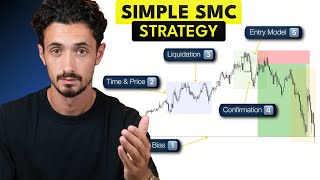
Relying on a single metric is a common pitfall for retail traders. Discovering the true best indicator forex trading approach usually involves creating a multi-layered confluence model. By integrating independent analytical dimensions—such as trend direction, momentum exhaustion, and volatility expansion—you drastically reduce false breakouts. Many institutional copy-trading networks featured in our copy trading hub utilize multi-indicator confluences to govern risk distribution.
1. Macro Filter
Establish primary bias using higher timeframe moving averages or structural trend channels.
2. Trigger Oscillator
Wait for pullbacks into value areas confirmed by oversold or overbought readings on secondary momentum tools.
3. Volatility Gate
Execute trades only when volatility bands expand, ensuring adequate market expansion to reach profit targets.
By structuring your analysis with these clear confluence checkpoints, you transform raw charting tools into a robust trading system capable of weathering diverse market conditions.