

What Is Tier One Trading?
At its core, tier one trading refers to the methodologies, operational workflows, and risk mitigation standards utilized by major institutional market participants, global banks, and top-tier proprietary firms. Individual retail traders often struggle because they attempt to navigate highly liquid, algorithmic currency and asset markets using outdated technical indicators and unverified strategies. Understanding tier one trading bridges the gap between amateur speculation and institutional execution precision.
To achieve a tier one trading mindset, market participants must look beyond basic chart patterns and focus heavily on liquidity pools, order flow dynamics, macroeconomic catalysts, and strict mathematical expectancy. Whether you are building automated systems using tools from our trading EA downloads library or developing manual price action strategies, aligning your approach with institutional mechanics is critical for long-term survival.
Institutional Liquidity
Recognizing where large market makers accumulate positions and trigger stop-loss sweeps to fuel major trend expansions.
Mathematical Expectancy
Moving away from win-rate obsession and focusing on risk-to-reward ratios and portfolio-level variance management.
💡 Pro Execution Tip: True tier one trading begins with minimizing transaction costs. Always factor in spread widening during London-New York session overlaps and utilize robust execution parameters.
Key Features and Trading Education
Comprehensive education is the backbone of tier one trading. Educational frameworks that genuinely move the needle focus on practical skill acquisition rather than theoretical fluff. Traders need to understand how to parse macroeconomic data releases, master multi-timeframe structural analysis, and execute rigorous backtesting protocols before risking live capital.
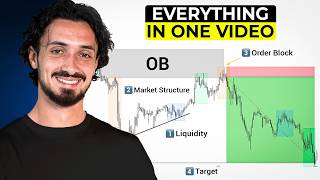
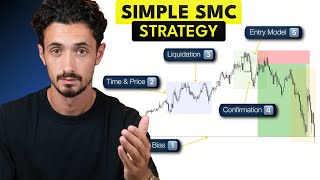
- Advanced order block and market structure mapping methodologies.
- Systematic risk sizing protocols paired with our risk & lot size calculators.
- Deep dives into technical charting tools found within comprehensive indicator guides.
- Psychological conditioning to withstand consecutive drawdowns without violating risk parameters.
| Parameter / Factor | Standard Setup | Institutional Setup |
|---|---|---|
| Risk Per Trade | Fixed 1% to 2% haphazardly | Dynamic volatility-adjusted fractional sizing |
| Execution Latency | Standard retail broker execution (50-150ms) | Direct market access / Fiber cross-connect (<5ms) |
| Trade Management | Emotional manual intervention | Algorithmic partial take-profits & break-even stops |
Tier One Trading Pricing and Plans
Investing in professional mentorship and educational platforms requires evaluating the financial commitment against potential returns. Premium educational ecosystems generally operate on structured subscription models or lifetime access passes. When analyzing pricing structures for tier one trading resources, consider what is included: live room access, archived video modules, proprietary software plugins, and community Discord or Telegram groups.
Moreover, traders scaling their operations often require custom development solutions rather than generic off-the-shelf tools. Exploring options like requesting tailored code via custom MQL coder quotes ensures your capital is spent on tools specifically engineered for your unique trading edge.
Pros, Cons and Final Verdict
Adopting a tier one trading philosophy transforms how you view the financial markets, but it is not an overnight shortcut to profitability. It demands intense dedication, screen time, and emotional discipline.
Pros
- ✓ Eliminates emotional guesswork by relying on clear institutional structures.
- ✓ Focuses heavily on risk management and capital preservation.
- ✓ Applicable across multiple asset classes including Forex, Indices, and Commodities.
Cons
- ✕ Steep learning curve for absolute beginners.
- ✕ Requires significant patience during periods of low market volatility.
- ✕ Premium educational resources and tools require financial investment.
Final Verdict: If you are serious about transitioning from a retail hobbyist to a consistent, disciplined market operator, embracing tier one trading principles is essential. Combine structured education with high-performance execution tools, rigorous risk management, and continuous backtesting to unlock your true trading potential.