

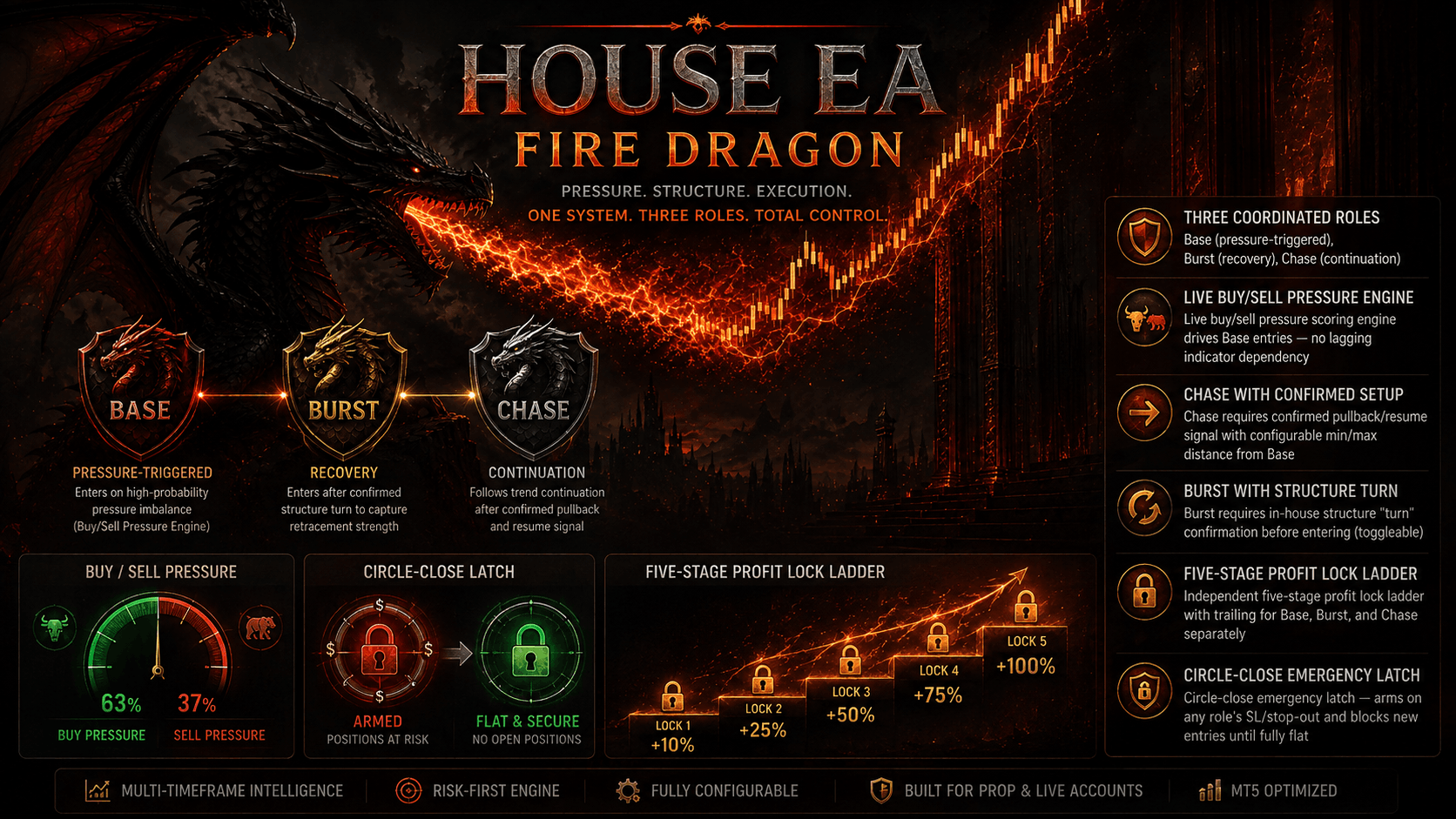
Best Forex Trading Robots: What Makes Them Stand Out?
In modern currency markets, algorithmic execution has transformed how traders approach technical analysis, position sizing, and risk management. A Forex trading robot—often referred to as an Expert Advisor (EA)—is a fully automated software program designed to analyze market price action, identify high-probability setups, and execute order entries and exits without human emotion.
The standard for top-tier automated trading systems goes far beyond basic moving average crossovers. High-performing algorithmic systems stand out due to their underlying architecture and adaptive market logic. When evaluating trading EA downloads, top-performing algorithms typically feature:
- Dynamic Risk Management: Automated balance-proportional lot sizing, automated stop-loss (SL) calculation based on market volatility (ATR), and precise take-profit (TP) rules.
- Adaptive Market Condition Detection: Built-in filters that detect whether the market is in a high-volatility trend or a tight consolidation range, modifying execution parameters accordingly.
- Economic News Filters: Integrated economic calendar inputs that automatically pause order opening prior to major macroeconomic releases (such as NFP, CPI, or central bank interest rate announcements).
- Slippage & Spread Controls: Strict maximum spread parameters that protect orders from opening during illiquid rollover hours or periods of extreme market widening.
Key Takeaway: The best Forex trading robots focus on capital preservation first and capital appreciation second. Robust algorithms prioritize risk protection over short-term rapid gain promises.
How to Choose the Best Forex Trading Robot
Selecting the right automated system requires careful examination of execution metrics rather than marketing claims. With hundreds of commercial and open-source automated strategies available, traders must apply strict screening criteria before deploying real capital.
To choose an algorithm that aligns with your trading capital, risk tolerance, and broker environment, consider these four fundamental evaluation steps:
- Demand Third-Party Live Track Records: Verify strategy performance on third-party verification platforms (such as Myfxbook or FXBlue) connected to live, real-money broker accounts rather than demo setups.
- Identify the Underlying Strategy Model: Understand whether the robot uses trend-following, breakout logic, mean-reversion scalping, or high-risk grid and martingale strategies.
- Inspect Parameter Customization: Look for algorithms that allow users to configure lot sizes, maximum loss thresholds, trading hours, and equity protection settings rather than "black box" systems with no editable parameters.
- Broker Compatibility & Execution Requirements: Determine if the trading logic demands low-latency ECN execution, raw spreads, or a dedicated Virtual Private Server (VPS).
Best Forex Trading Robots for MT4 and MT5
MetaTrader 4 (MT4) and MetaTrader 5 (MT5) remain the dominant industry platforms for running automated Expert Advisors. However, structural differences in programming languages (MQL4 vs. MQL5) and execution environments affect how robots perform on each platform.
MT4 remains widely popular due to its deep historical ecosystem and broad broker support. However, MT5 offers substantial technical improvements for automated trading. MT5 provides native multi-currency backtesting capabilities, faster 64-bit multi-threaded optimization, asynchronous order execution, and real market depth (DOM) data integration.
Traders looking to build or modify proprietary trading systems for either platform can leverage dedicated resources or custom development via custom MQL coding services to optimize algorithm logic for low-latency MT4 and MT5 environments.
- MT4 Robots: Ideal for single-currency strategies, legacy infrastructure setups, and standard retail broker accounts.
- MT5 Robots: Superior for complex multi-asset strategies, advanced stock/index/commodity automation, and rapid backtesting over tick data.
Forex Trading Robot Performance: Win Rate, Profit & Drawdown
One of the most common pitfalls when assessing trading robots is over-focusing on win percentage. A robot advertising a 95% win rate may sound attractive, but without proper risk parameters, a single losing trade can wipe out weeks of accumulated profits—a classic pattern seen in unhedged grid or martingale systems.
Professional quantitative analysis measures algorithmic performance using balanced, risk-adjusted metrics across extensive data samples:
- Maximum Equity Drawdown: The peak-to-trough decline in account equity, expressed as a percentage. A sustainable trading system typically aims to keep maximum equity drawdown under 15% to 20%.
- Profit Factor: The ratio of total gross profits to total gross losses. A Profit Factor above 1.5 indicates a robust mechanical edge, while values above 2.0 reflect exceptional performance over a statistically significant trade sample (500+ trades).
- Risk-to-Reward Ratio (RRR): The average gain per winning trade relative to the average loss per losing trade. An algorithm with a 40% win rate can remain highly profitable if its average winner is 2 to 3 times larger than its average loser.
- Sharpe & Sortino Ratios: Statistical measurements of risk-adjusted return, quantifying how much excess return an algorithm generates per unit of overall volatility or downside risk.
Pro Tip: When analyzing backtesting reports, ensure the simulation quality reads 99.9% with real variable spreads and slippage enabled. Fixed-spread backtests on default MetaTrader settings do not reflect real market conditions.
Best Forex Trading Robots for Scalping, Gold & Automated Trading
Different asset classes and timeframes require distinctly engineered algorithmic strategies. An automated system designed for daily trend-following on major currency pairs will fail if deployed as a high-frequency scalper on volatile commodities.
Here is how specialized trading algorithms target different market conditions:
- Forex Scalping EAs: Designed to target small price movements on lower timeframes (M1, M5, or M15). These systems rely on ultra-low latency execution, raw zero-spread accounts, and precise execution logic. Many traders complement these setups with technical setups from indicator guides to refine confirmation rules.
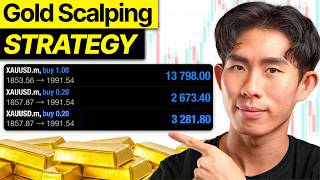
- Gold (XAU/USD) EAs: Gold trades with significantly higher average true range (ATR) and frequent momentum surges compared to major currency pairs. Automated gold trading algorithms must utilize wider stop-loss buffers, volatility-adjusted position sizing, and strong trend-breakout detection logic.
- Multi-Account & Social Copy Automation: Traders managing multiple accounts or providing strategy signals frequently combine local EA execution with centralized account synchronization platforms using copy trading dashboards to mirror automated trade setups across various broker accounts instantly.
How We Test and Compare Forex Trading Robots
Our evaluation methodology relies on strict quantitative standards to ensure objective, conflict-free testing of trading algorithms. We maintain zero reliance on marketing claims, backtest curves that lack commission structures, or unverifiable vendor screenshots.
Every trading robot evaluated within our dynamic catalog undergoes a multi-stage testing protocol:
- 10-Year High-Precision Backtesting: Algorithms are subjected to 99.9% tick-data modeling using historical real variable spreads, commission costs, and simulated order slippage across bull, bear, and consolidation market regimes.
- Live Account Forward Testing: Strategies pass through a minimum 3-to-6-month forward-testing period on live broker infrastructure to measure latency impact, order execution speed, and real-world execution matching.
- Code & Parameter Audit: Expert technical reviews check for hidden hard-coded risk structures, such as unlimited grid progression without hard stop losses, equity curve manipulation, or hard-coded expiration dates.
- Risk-Adjusted Performance Ranking: Algorithms are indexed in our system database based on calculated Sharpe ratios, maximum drawdown recovery factors, and long-term equity stability.