



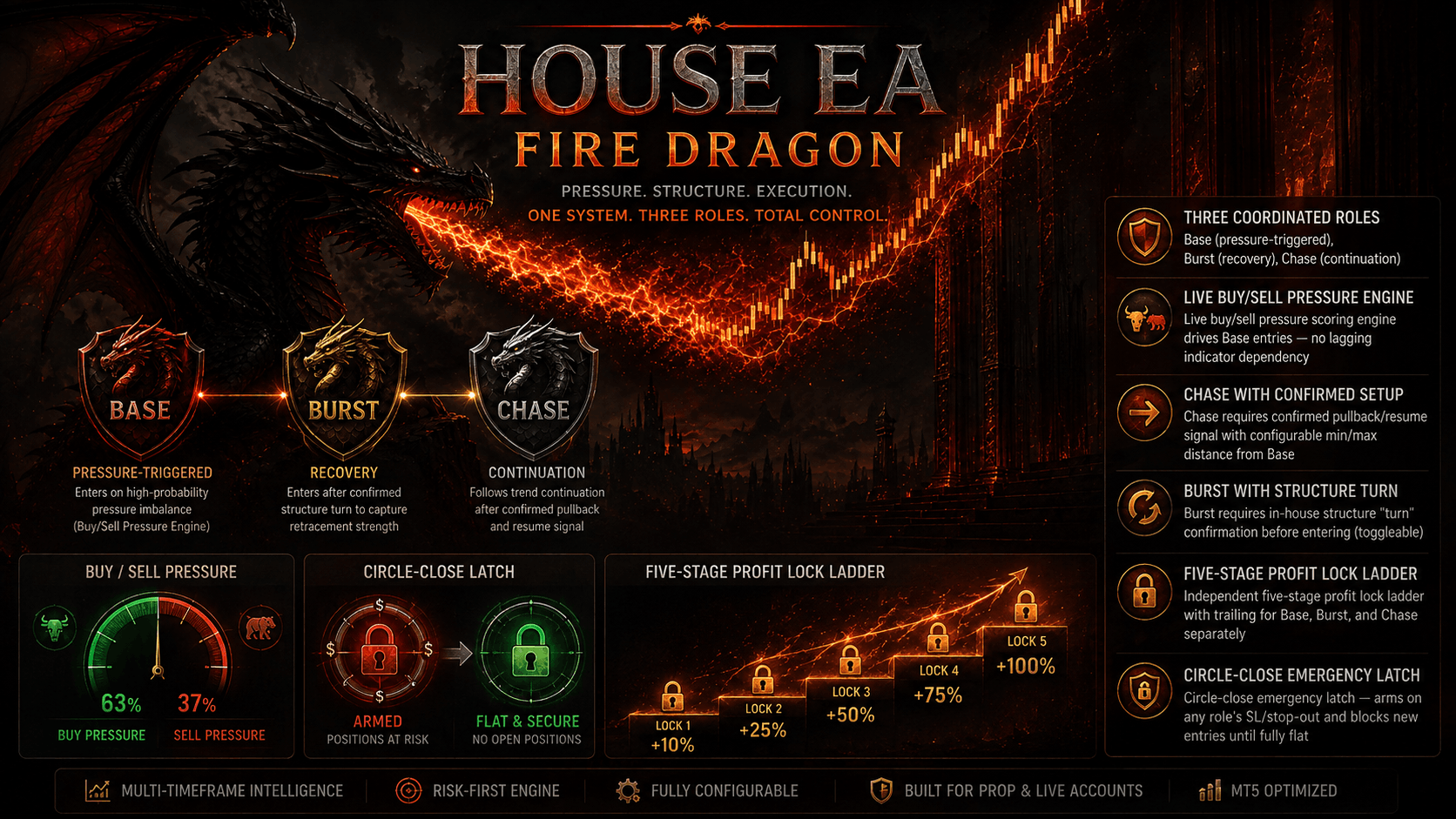


What is an XAUUSD Auto Trader and How Does it Work?
An XAUUSD auto trader is a specialized algorithmic trading system designed to execute trades on Gold (represented by the symbol XAU against the US Dollar, USD) automatically. Operating on trading terminals like MetaTrader 4 (MT4) or MetaTrader 5 (MT5), these systems rely on a pre-programmed set of rules to scan the gold market, identify high-probability entry points, and manage active trades without human intervention.
Because the gold market is highly liquid and sensitive to macroeconomic indicators, automated systems typically process extensive historical data to identify price trends, support/resistance breakouts, or mean-reversion levels. Traders can easily explore reliable system foundations by browsing curated trading EA downloads to find algorithms that fit their specific risk tolerance.
- Market Scanning: Continuously monitors XAUUSD price action across multiple timeframes.
- Execution Engine: Sends immediate buy or sell orders via APIs based on mathematical indicators.
- Risk Management: Implements predefined stop-loss (SL) and take-profit (TP) targets to protect trading capital.
Note: Unlike traditional currency pairs, Gold possesses significant daily volatility. An auto trader optimized for stable currencies can experience heavy losses on Gold if its grid or scaling configurations are not explicitly modified for commodities.
Finding a Broker with Low Spreads and Fast Execution for Gold
The success of any automated gold trading strategy is heavily dependent on your choice of broker. XAUUSD is known for sudden liquidity shifts, especially during key economic releases like the Non-Farm Payrolls (NFP) or Consumer Price Index (CPI). If your broker suffers from slow trade execution, your auto trader will encounter slippage, which erodes profit margins.
When screening brokers for algorithmic gold trading, prioritize "ECN" or "No Dealing Desk" execution models. These brokers route your trades directly to global liquidity providers, reducing execution delays and keeping the buy/sell spreads tight.
- Tight Spreads: Look for brokers offering raw spreads averaging below 1.5 pips (15 points) on XAUUSD.
- Minimal Slippage: Test execution speed on demo and small cent accounts to ensure orders fill at your requested price.
- High Leverage and Margin Limits: Gold trading often requires robust margin structures to accommodate intraday price swings.
Selecting the Best VPS Location for Minimal Execution Latency
To ensure your automated system runs 24/5 without interruption, hosting your trading terminal on a Virtual Private Server (VPS) is highly recommended. A VPS ensures your strategy operates smoothly even if your local computer loses internet access or experiences power outages.
However, not all VPS configurations are equal. The absolute location of your VPS hard drives relative to your broker's execution servers dictates your execution latency. Traders coordinating complex networks often integrate these setups with advanced copy copier dashboards where keeping connection delays below 5 milliseconds is mandatory to maintain synchronicity.
Pro Tip: Major financial brokers host their main servers in Equinix data centers such as London (LD4), New York (NY4), or Frankfurt (FR2). Always ask your broker for their server's exact physical location and rent a VPS in that same data center or city.
Setting Up Capital Allocation and Safe Position Sizing
Even the most advanced algorithmic model will face a string of consecutive losses. Gold's massive daily range (often exceeding 300 to 500 pips in a single session) requires a highly conservative position sizing strategy. If your automated trader utilizes grid mechanics, martingale structures, or scaling techniques, capital preservation must be your top priority.
Start by dividing your capital based on your strategy's peak historical drawdowns. For standard trend-following systems, risk should ideally be limited to 0.5% to 1.5% of account balance per transaction. If you are operating on a smaller account, utilize micro-lots (0.01 lots) to ensure your system has enough breathing room during market volatility.
- Drawdown Thresholds: Configure absolute equity stop-guards in your terminal settings to close all trades if total account loss exceeds 15% to 20%.
- Contract Sizes: Keep in mind that 1 standard lot of gold represents 100 ounces, which possesses significantly more contract value than standard foreign exchange pairs.
Monitoring and Adjusting Your XAUUSD Auto Trader Weekly
While "automated" implies hands-free operation, total negligence is the leading cause of account blowouts. Successful algorithmic traders treat their systems like business operations. You must schedule weekly review intervals—typically on Friday evenings after the market closes—to assess performance and verify if the market's current regime matches your system's design.
If the market is experiencing strong directional movements fueled by interest rate announcements or geopolitical crises, you may want to reference professional indicator guides to manually determine if your trading setup needs optimization.
- Economic Calendar Filter: Temporarily pause your auto-trader ahead of massive global announcements to prevent unexpected price gaps.
- Slippage and Spread Audit: Analyze the actual fill prices in your log files to confirm that latency hasn't deteriorated.
- Weekly Re-Optimization: Slightly tweak dynamic parameter settings such as ATR multipliers or volatility filters to remain aligned with current market ranges.