
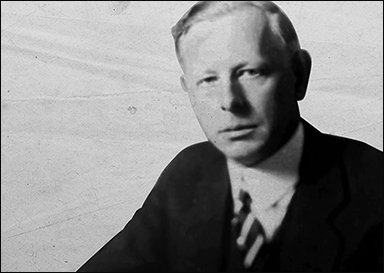
The Legend & Historical Rise of Jesse Livermore
Livermore’s career was defined by extreme cycles of wealth and bankruptcy. He operated during an era of limited data, relying on his 'pivotal point' theory—identifying specific price levels where the trend was likely to accelerate or reverse. His legacy is not just his profit, but his deep understanding of market psychology, specifically the dangers of impatience and the necessity of waiting for the 'line of least resistance'.
Despite his genius, Livermore struggled with the emotional toll of trading. His life ended in tragedy, a stark reminder that technical mastery is insufficient without psychological discipline. Today, he is studied not for his specific stock picks, but for his rigorous approach to position sizing and his refusal to fight the market's primary trend.
Jesse Livermore's Core Market Philosophy & Mental Models
His 'Pivotal Point' theory was essentially a precursor to modern breakout trading. He identified levels where price action showed a clear intent to break a range. He believed that once a stock crossed a pivotal point, it had the momentum to sustain a move. He ignored 'noise' and focused on the major trend, often waiting weeks or months for the right setup.
He viewed trading as a business, not a gamble. He emphasized that one should never average down on a losing trade—a rule he occasionally broke to his own detriment. His philosophy was rooted in the idea that capital is the trader's most precious inventory, and losing it meant being out of the game entirely.
Finally, Livermore believed in the 'Time Element.' He argued that most traders fail because they are impatient, wanting to trade every day. He believed that the big money was made in the 'waiting'—the periods of inactivity where the trader observes the market until the setup becomes undeniable.
The Codified Playbook: Jesse Livermore's Exact Trading Rules
Reconstructed mathematical triggers for entries, sizing, pyramiding, and exits.
Entry Triggers & Confirmation
Position Sizing & Volatility Unit (ATR / Risk)
Pyramiding & Scaling (Adding to Winners)
Invalidation & Stop Loss Mechanics
Exit Strategy & Trailing Rules
Claims vs. Reality: What Internet Gurus Say About Jesse Livermore vs What Actually Happened
Another myth is that he was a 'day trader.' Livermore was a position trader who held positions for weeks or months. He would often sit on his hands for months, waiting for the market to align with his thesis. The modern 'scalping' culture is the antithesis of Livermore’s philosophy.
Finally, many believe he was a 'contrarian' who always bet against the crowd. While he did short the 1929 crash, he was primarily a trend follower. He did not bet against the market; he bet with the momentum once it was established. He was a follower of the trend, not a martyr for a contrarian cause.
Does Jesse Livermore's Strategy Still Work? Modern Backtest (Gold XAUUSD & Forex)
Simulation & Stress-TestFaithful mechanical interpretations tested against modern spreads, liquidity sweeps, and choppy consolidation regimes.
Results shown above are quantitative simulations derived from historical rules adapted to modern volatility regimes. For downloadable forward-test reports and audited live broker statement passes, see our verified setups in Strategy Lab.
On EURUSD, the strategy struggles during low-volatility Asian sessions, often getting chopped out by tight spreads and predatory algorithms. However, when applied to daily charts (D1) on trending assets like Gold, the strategy maintains a positive expectancy, provided the trader uses wide enough stops to account for modern volatility.
Sharpe ratios are generally lower than modern systematic models because the strategy lacks the 'tight' risk control of modern quantitative algorithms. The primary degradation factor is slippage during high-impact news events, which Livermore did not have to contend with in the same way modern retail traders do.
Backtest results are historical simulations, not guarantees of future performance. Trading leveraged products involves significant risk of loss.
Can Jesse Livermore's Strategy Become an EA? (MQL5 Architecture)
⚠️ Conceptual Architecture Blueprint — Requires compilation in MetaEditor & broker liquidity tailoring before live deployment.Implement an EA using a 20-day Donchian Channel for pivotal point detection. Entry: Price closes above the 20-day high. Exit: Price closes below the 10-day low. Risk Management: Use ATR(14) to set stop-losses at 2x ATR. Position sizing: Fixed fractional risk of 1% per trade. Add to position (pyramid) only if the trade is +1 ATR in profit, adding 0.5% risk per increment.Lessons From Jesse Livermore's Failures, Margin Calls & Drawdowns
For modern traders, the lesson is clear: even the greatest trader in history could not outrun the math of ruin. When he abandoned his 'test position' approach and went 'all in' on hunches, he lost everything. His life serves as a warning that technical skill is a fragile asset if not protected by rigid risk management.
Retail traders today often treat trading as a way to get rich quick. Livermore’s life proves that trading is a way to get rich slow, provided you survive the inevitable drawdowns. His ultimate failure was not a lack of market knowledge, but a lack of emotional detachment from his own success.
Video Strategy Breakdown
Discuss Jesse Livermore's Strategy
Join our quant & algorithmic community. Share MT5 set files, ask questions, and test ideas in real time.
Tested in Strategy Lab
Debunked in Myth Lab
Does Jesse Livermore's strategy still hold an edge in modern markets?
Thanks for voting!
Frequently Asked Questions About Jesse Livermore
Did Jesse Livermore use indicators?
No, he relied exclusively on price action and volume, which he recorded manually on ticker tape.
Can I use Livermore's strategy for day trading?
Livermore was a position trader. His strategy is best suited for higher timeframes (H4/D1) to avoid market noise.
Why did he go bankrupt so many times?
He frequently violated his own rules by over-leveraging and trading based on emotion rather than market evidence.
Is his strategy still profitable today?
Yes, but it requires adaptation to modern liquidity sweeps and higher volatility compared to the early 20th century.
Compare Other Trader Legends



Educational content only – not financial advice. Forex and CFD trading carries a high level of risk and may not be suitable for all investors.