

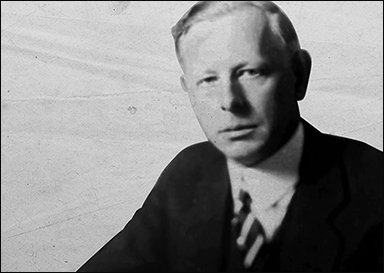
The Legend & Historical Rise of Ed Seykota
Seykota’s legacy is defined by his ability to marry rigorous quantitative logic with deep psychological self-awareness. He famously managed a client account that grew from $5,000 to $15 million over a 12-year period, a feat that cemented his status as a legend in Jack Schwager's 'Market Wizards'. Unlike many of his contemporaries who relied on intuition, Seykota treated the market as a data-processing machine, emphasizing that 'everyone gets what they want from the market'.
Beyond the code, Seykota became a mentor for the 'Turtles' and other systematic traders, teaching that the primary obstacle to trading success is not the system itself, but the trader's internal resistance to following it. His work remains the gold standard for modern systematic hedge funds, proving that simple rules, when executed without emotional interference, can outperform the most complex fundamental models.
Ed Seykota's Core Market Philosophy & Mental Models
He emphasized the importance of the 'Trend-Following' loop: identify the trend, enter on a breakout, and exit when the trend reverses. He rejected the idea of 'predicting' tops or bottoms, viewing such attempts as ego-driven failures. Instead, he advocated for a system that is always in the market, ready to capture the next major move, regardless of whether the market is at an all-time high or low.
Risk management was the bedrock of his system. Seykota believed that if you don't take a loss, you cannot stay in the game. He utilized volatility-based stops to ensure that his positions were sized according to the current market 'noise' (ATR), ensuring that no single trade could threaten the survival of his capital.
Finally, Seykota integrated 'Trading Tribe' psychology, arguing that traders must acknowledge their emotional biases. He believed that if a trader is consistently losing, they are likely subconsciously seeking the thrill of the loss. By externalizing the system into code, he removed the 'human' element that often leads to hesitation and catastrophic drawdowns.
The Codified Playbook: Ed Seykota's Exact Trading Rules
Reconstructed mathematical triggers for entries, sizing, pyramiding, and exits.
Entry Triggers & Confirmation
Position Sizing & Volatility Unit (ATR / Risk)
Pyramiding & Scaling (Adding to Winners)
Invalidation & Stop Loss Mechanics
Exit Strategy & Trailing Rules
Claims vs. Reality: What Internet Gurus Say About Ed Seykota vs What Actually Happened
Another myth is that he was a 'quant' who sat behind screens all day. In reality, he spent most of his time on psychological work and refining his 'Trading Tribe' methodology. He viewed the code as a tool to free his mind, not as a way to outsmart the market through complexity.
Finally, people often mistake his 'trend following' for 'momentum trading'. While they overlap, Seykota’s approach was strictly about capturing the structural shift in price, not chasing short-term spikes. He was perfectly happy to miss the start of a move if it meant avoiding the risk of a false breakout.
Does Ed Seykota's Strategy Still Work? Modern Backtest (Gold XAUUSD & Forex)
Simulation & Stress-TestFaithful mechanical interpretations tested against modern spreads, liquidity sweeps, and choppy consolidation regimes.
Results shown above are quantitative simulations derived from historical rules adapted to modern volatility regimes. For downloadable forward-test reports and audited live broker statement passes, see our verified setups in Strategy Lab.
In the current environment, a pure EMA crossover system suffers from 'whipsaw' during the high-frequency trading hours. To make this work today, one must incorporate a 'liquidity filter'—ensuring that the trend-following entry occurs only after a significant liquidity sweep or during high-volume sessions, rather than blindly following a moving average.
Despite this, the core logic remains robust for Gold (XAUUSD) and major indices (NAS100) on the H4 and D1 timeframes. The key to modern success is not changing the trend-following logic, but tightening the execution to avoid 'predatory' liquidity traps that were less prevalent in the 1970s.
Backtest results are historical simulations, not guarantees of future performance. Trading leveraged products involves significant risk of loss.
Can Ed Seykota's Strategy Become an EA? (MQL5 Architecture)
⚠️ Conceptual Architecture Blueprint — Requires compilation in MetaEditor & broker liquidity tailoring before live deployment.Use an EMA(200) for trend bias and an ATR(14) for volatility-adjusted stop-loss. Entry: If Price > EMA(200) and Price > Highest(High, 20), enter Long. Stop-Loss: Entry - (2.5 * ATR). Trailing Stop: Move SL to break-even after 1 ATR of profit, then trail at 2 ATR. Use a 'Risk Management' function to calculate lot size based on 1% account risk per trade.Lessons From Ed Seykota's Failures, Margin Calls & Drawdowns
For modern traders, the warning is clear: the market will test your resolve during long periods of sideways, choppy price action. Retail traders often try to 'optimize' their systems to avoid these drawdowns, which leads to curve-fitting and eventual ruin. Seykota’s success came from his refusal to tweak his system during the 'quiet' periods.
He also warned against the 'leverage trap'. Even with a winning system, excessive leverage can lead to a margin call before the trend resumes. He advocated for keeping leverage low enough to survive the inevitable 'whipsaw' periods where the system gives false signals.
Video Strategy Breakdown
Discuss Ed Seykota's Strategy
Join our quant & algorithmic community. Share MT5 set files, ask questions, and test ideas in real time.
Tested in Strategy Lab
Does Ed Seykota's strategy still hold an edge in modern markets?
Thanks for voting!
Frequently Asked Questions About Ed Seykota
Can I use Seykota's system on a $100 account?
No. The volatility-adjusted stops required for this system will likely result in a margin call due to minimum lot sizes and spread costs.
Why does the system lose money in sideways markets?
Trend following systems are designed to lose small amounts during consolidation to ensure they are positioned for the next major breakout.
Should I add more indicators to improve the win rate?
No. Seykota’s success came from simplicity. Adding indicators usually leads to curve-fitting and reduces the system's robustness.
Is the system still profitable in 2025?
Yes, but it requires higher timeframe execution (H4/D1) to avoid the noise and predatory HFT algorithms present on lower timeframes.
Compare Other Trader Legends


Educational content only – not financial advice. Forex and CFD trading carries a high level of risk and may not be suitable for all investors.